Source white additive masterbatch granule for molding film extrusion
Compare 30 listings for white additive masterbatch granule suitable for automotive parts, pipes, and medical components. Buyers can evaluate carriers like PP, PE, and PET alongside usage ratios from 0.5% to 70% for various plastic processing needs.
Key considerations
Products List



Comprehensive Sourcing Guide
Strategic Sourcing Guide for White Additive Masterbatch Granules
Understanding Product Specifications and Carrier Compatibility
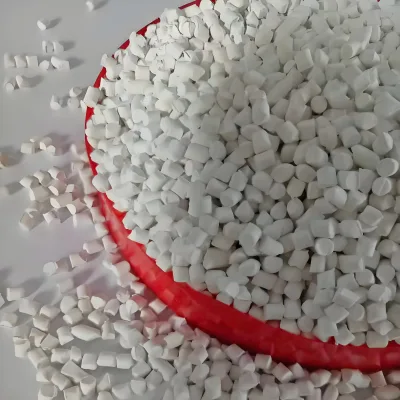
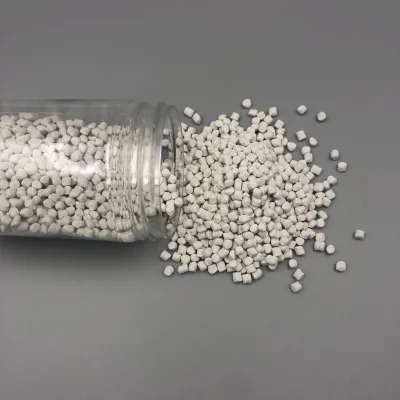
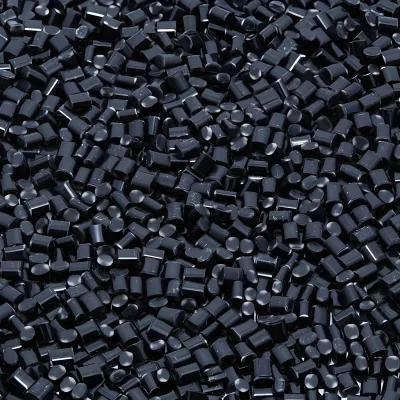
When sourcing white additive masterbatch granules, the primary objective is to identify a product that integrates seamlessly with your specific polymer processing line while delivering consistent coloration and functional performance. The core product is defined as a Color Masterbatch, appearing as small granules or small color granules, which serves as a concentrated mixture of pigments and additives dispersed within a carrier resin. The physical form is consistently described as granular, with a single package size often standardized around 10x5x5 cm, and a typical single gross weight of 1.000 kg per unit.
The most critical technical variable in this category is the carrier resin. The supplied data indicates a wide spectrum of compatible carriers, including PP (Polypropylene), PE (Polyethylene), PS (Polystyrene), PET (Polyethylene Terephthalate), ABS (Acrylonitrile Butadiene Styrene), PA (Polyamide), HDPE (High-Density Polyethylene), and LDPE (Low-Density Polyethylene). Selecting the correct carrier is non-negotiable; a mismatch between the masterbatch carrier and the base resin can lead to poor dispersion, surface defects, or mechanical failure in the final product. For instance, specific listings highlight carriers such as PP, PE, PS, PET, and ABS, while others specify combinations like PP PE HDPE PA or PP PE LDPE HDPE PET PVC. Buyers must verify that the supplier's specific SKU matches the resin grade of their production equipment.
Furthermore, the product grade is tailored to specific manufacturing processes. The available grades include spray coating, calendering, rotational molding, hollow grade, molding, foaming, hot melt, blow molding, extrusion, blown film, injection molding, demoulding, coating, and drawing grades. This diversity implies that a single masterbatch formulation is not universally applicable. A granule designed for injection molding may possess different flow characteristics compared to one intended for blown film extrusion. The "Advantage" field frequently cites fluidity, high crystallinity (HCPP), wear resistance, low temperature resistance, high flow, toughened grade, high impact resistance, high sliding, standard grade, hydrolysis resistance, high strength, transparent grade, high rigidity, and conductive grade properties. These attributes suggest that the white additive masterbatch is not merely a coloring agent but often a functional additive designed to enhance the physical properties of the final plastic component.
Compliance, Certification, and Regulatory Standards
In the B2B procurement of industrial raw materials, verifying compliance is as important as verifying the physical product. The market data for Color Masterbatch granules indicates that suppliers often provide products with specific certifications, including ISO9001, SGS, ROHS, CE, and ISO. These certifications serve as evidence that the manufacturing facility adheres to quality management systems and environmental safety standards. Specifically, the presence of ROHS (Restriction of Hazardous Substances) and CE (Conformité Européenne) marks suggests that the product is suitable for markets with strict regulations regarding hazardous materials, which is particularly relevant for applications in automotive parts, medical grade components, and electronic and electrical components.
However, buyers must exercise caution. The presence of a certification label in a product listing does not guarantee that every batch of the specific SKU you order is currently certified. The data shows variations, such as one listing citing "ISO9001 SGS ROHS" and another citing "CE, ISO, RoHS." It is the buyer's responsibility to request current, valid certificates of analysis (CoA) and certificates of compliance (CoC) for the specific lot number being purchased. The product origin is consistently listed as Anhui, China, or generally China. While the region is a major hub for plastic raw materials, the specific factory location and the validity of their ISO or SGS audits should be confirmed directly with the supplier.
For applications involving medical grade materials, optical grade components, or food contact items (often implied by "special materials for cast films"), the regulatory requirements are even more stringent. The standard product description mentions "Plastic Raw Material Granule" and various grades, but it does not explicitly list FDA or EU food contact compliance. Therefore, buyers must explicitly ask if the white additive masterbatch meets the specific regulatory standards required for their end-use application. Relying solely on the general "RoHS" or "ISO" tags without verifying the specific scope of the certification can lead to compliance failures in the final product.
Cost Drivers and Pricing Variables
The pricing structure for white additive masterbatch granules is highly variable, as evidenced by the observed listed price range of 0.1 to 36,880 USD. This massive disparity is not indicative of a single product type but rather reflects differences in carrier resin costs, pigment concentration, additive complexity, and order volume. The Minimum Order Quantity (MOQ) ranges from 1 to 1000 units, further influencing the unit price. A buyer purchasing a single item at a high price point is likely looking at a sample or a very specialized, low-volume formulation, whereas a buyer ordering 1000 units is likely accessing bulk industrial pricing.
Several factors drive the cost of these granules. First, the carrier resin type is a primary cost driver. Engineering-grade carriers like PA (Polyamide) or specialized grades of PET are generally more expensive than commodity resins like standard PP or PE. Second, the concentration of the white pigment and functional additives affects the price. A masterbatch with a high loading of titanium dioxide (the standard white pigment) or specialized additives for high impact resistance and hydrolysis resistance will command a higher price than a standard dilution grade. Third, the complexity of the application grade plays a role. Masterbatches designed for high-performance applications, such as automotive parts or medical grade components, often require more rigorous quality control and specialized formulation, increasing the cost.
The usage percentage is another critical economic factor. The data indicates usage rates ranging from 0.5% to 70%. A masterbatch intended for high-loading applications (e.g., 70%) may have a different cost structure than one used at low concentrations (0.5% to 5%). Buyers should calculate the total cost of ownership, not just the price per kilogram. A slightly more expensive masterbatch that offers better fluidity or requires a lower usage percentage (e.g., 2% vs 5%) can result in significant savings in the overall production run. Additionally, the packing standard of 25kg/bag is a common unit, but the single package size and gross weight must be factored into logistics and shipping costs, especially for international procurement from China.
Typical Applications and Performance Requirements
The versatility of white additive masterbatch granules is demonstrated by their extensive application list. These products are utilized across a vast array of industries, including automotive parts, optical grade components, pipe manufacturing, sports equipment, medical grade devices, home appliance components, fibers, plate grade products, electronic and electrical components, profiles, wire and cable grades, and general plastic products. The specific application dictates the required performance attributes. For example, a masterbatch used for wire and cable grades must possess high electrical insulation properties and potentially high sliding characteristics. In contrast, a masterbatch for automotive parts must demonstrate high impact resistance, toughness, and durability under varying temperature conditions.
The "Usage" field in the product data highlights specific application areas such as Blowing Film Extrusion, Molding, Injection, and Specialty Plastics. This confirms that the masterbatch is a critical component in the conversion process. For injection molding, the granule must exhibit high flow and low viscosity to fill complex molds efficiently. For blowing film extrusion, the material must maintain stability and uniformity during the stretching process. The data also mentions "Specialty Plastics" and "Plastic Products" as broad application categories, suggesting that the masterbatch can be adapted for niche uses as well.
Performance claims in the data include high crystallinity, wear resistance, low temperature resistance, and high rigidity. These are not generic marketing terms but specific technical requirements for certain end-products. For instance, low temperature resistance is crucial for products used in cold environments, while high rigidity is essential for structural components. The "Customization" attribute is marked as "Available," indicating that buyers can request tailored formulations to meet specific application needs, such as specific color shades or unique additive packages for specialized industries like medical or optical applications.
Supplier Evaluation and Quality Control Protocols
Evaluating a supplier for white additive masterbatch granules requires a rigorous approach to ensure consistency and reliability. The first step is verifying the supplier's ability to provide the specific carrier and grade required. Given the wide range of carriers (PP, PE, PS, PET, ABS, PA, etc.) and grades (spray coating, calendering, injection molding, etc.), a supplier must demonstrate technical competence in matching these variables to the buyer's production line. The "Brand Name" listed as "Belief" in some contexts suggests that established brands may exist, but buyers should not rely on brand recognition alone without verifying the specific product attributes.
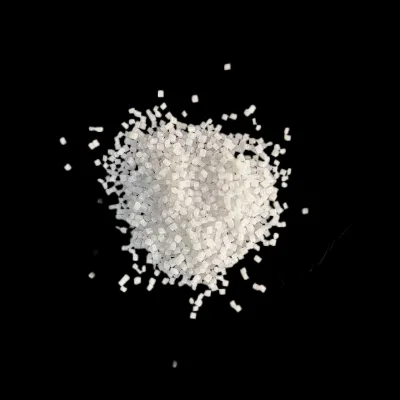
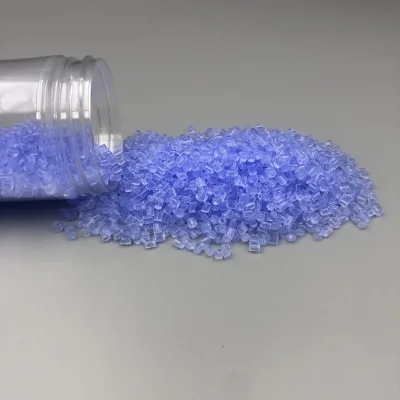
Quality control should focus on the physical consistency of the granules. The appearance is described as "Small Granule" or "Small Color Granule," and the shape is "granular." Buyers should request samples to verify the uniformity of the granule size and the absence of agglomeration or foreign contaminants. The "Single package size" and "Single gross weight" provide a baseline for checking packaging integrity; damaged bags can lead to moisture absorption, which is detrimental to the performance of the masterbatch, especially for grades requiring hydrolysis resistance.
Furthermore, the "Customization" availability is a key indicator of a supplier's flexibility. A supplier that offers customization is more likely to be able to adjust the formulation to meet specific performance requirements, such as adjusting the usage percentage or modifying the carrier blend. However, customization introduces complexity, and buyers must ensure that the supplier has the necessary R&D capabilities and quality assurance processes to maintain consistency across customized batches. The "Usage" range of 0.5% to 70% also suggests that the supplier should be able to provide technical support on the optimal dosage for the buyer's specific process, as incorrect usage can lead to defects in the final product.
Long-Term Procurement and Supply Chain Considerations
Sourcing white additive masterbatch granules is not a one-time transaction but a long-term partnership that requires careful planning. The "Place of Origin" is consistently listed as Anhui, China, which is a significant manufacturing hub. However, buyers must consider the logistics and lead times associated with international shipping. The "Selling Units" are listed as "Single item," but the "Packing" is typically 25kg/bag, and the MOQ can be as high as 1000 units. This implies that for long-term supply, buyers should aim for larger, consistent orders to secure better pricing and ensure supply continuity.
The "Advantage" of fluidity and the various "Grade" options suggest that the masterbatch is a critical input that affects the efficiency of the production line. Any disruption in supply can halt production, making it essential to evaluate the supplier's capacity and reliability. Buyers should inquire about the supplier's inventory levels, production capacity, and ability to handle demand spikes. The "Standard" listed as "PP/PE, Plastic Raw Material Granule" indicates that the product is a commodity, but the specific formulation can vary, making it crucial to lock in the exact specification in the purchase agreement.
Finally, the "Key words" of "Industrial Raw Materials" underscore the importance of this product in the broader supply chain. Buyers should consider the total cost of ownership, including the cost of the masterbatch, the cost of processing (energy, time), and the cost of potential defects. A masterbatch with a higher upfront cost but better performance (e.g., higher fluidity, lower usage percentage) may result in lower overall costs. Additionally, the "Customization" option allows for long-term optimization of the product to the buyer's specific needs, which can lead to significant competitive advantages in the final market. By focusing on technical compatibility, regulatory compliance, and supplier reliability, buyers can secure a stable and cost-effective supply of white additive masterbatch granules.
FAQs
What carrier resins are compatible with white additive masterbatch granules?
Compatible carriers include PP, PE, PS, PET, ABS, PA, HDPE, and LDPE. Selecting the correct carrier is essential to prevent poor dispersion or mechanical failure in the final product.
Which certifications should I verify for these masterbatch granules?
Products often carry ISO9001, SGS, ROHS, CE, and ISO certifications. Buyers must request current certificates of analysis for specific lot numbers to ensure compliance with safety standards.
How is the usage percentage determined for these granules?
Usage rates typically range from 0.5% to 70% depending on the formulation. Higher loading applications may require different cost structures compared to low-concentration dilution grades.
Can I customize the carrier and grade for specific applications?
Customization is available for carriers and grades tailored to injection molding, blowing film, or extrusion. Buyers should verify that the specific SKU matches their production equipment resin grade.
What are the standard packaging dimensions and weight for these granules?
Standard packaging is 25kg per bag with a single gross weight of 1.000 kg. The single package size is often around 10x5x5 cm, affecting logistics and shipping costs.
Which applications utilize white additive masterbatch granules?
Applications include automotive parts, medical devices, wire and cable, and home appliance components. Specific grades like high impact resistance or hydrolysis resistance are chosen based on end-use requirements.